

With Wilderness of Mirrors, the Tunisian band Myrath once again expand their musical universe by incorporating new African textures, a more cinematic approach, and more introspective lyrics. Following the success of their previous album Karma, the band has decided to take risks and explore less obvious territories within their characteristic oriental metal style.
This interview with Kevin Codfert, keyboardist and one of the main sonic architects of the group, was conducted before the band’s new Spanish dates were confirmed (after their previous appearance at Granito Rock), which have now been announced as part of their upcoming European tour. In it, we discuss the album’s creative process, the artistic risk involved in their sonic evolution, the influence of his personal life on the songwriting, and the technical challenge of bringing these new songs to the stage.
David Aresté
M.S: Hi Kevin, it’s a pleasure to speak with you again. Thank you very much for taking the time to talk with us. How do you feel now that the recording of Wilderness of Mirrors is finished?
Well, now I can sleep, I guess. It has been a very long process. It took time to make everything work together. We composed many songs and discarded maybe 80% of the material to be completely sure about what we were doing. We tried to innovate musically and that took time. I’ve just returned from Tunisia and now we can rest for a few days before starting promotion and preparing for the April tour.
M.S: You’ve been very productive lately, releasing two studio albums and a compilation in just two years. What has driven this burst of creativity?
I have no idea. Sometimes ideas come suddenly and other times the process is longer. Maybe this time it was more fluid because we have known each other for 15 years and communication is very natural. For some reason it was faster.


M.S: It’s interesting that Karma was more melodic metal and Wilderness of Mirrors sounds more symphonic or cinematic. Was the songwriting process different?
No, the process was not different. What changes is the objective. We don’t want to repeat formulas. On this album we wanted to incorporate the deeper roots of African music within a metal context. It was a journey to understand it and adapt it to our vision.
M.S: Did your current state of mind influence the album?
Yes. I’m the father of a four-and-a-half-year-old daughter, and that changes your perspective. On this album we use five languages: Arabic, English, Swahili, Wolof and French. For example, in “Les Enfants Du Soleil” I use French to express personal emotions. It doesn’t change the technical process, but it does change the mindset.


M.S: The vocals sound more refined. How did you work on that?
I don’t think there is an improvement as such. We used the same microphone as before. It’s more a matter of composition. We did spend a lot of time on the choirs; there are vocal layers everywhere, and that brings stability to the mix.
M.S: The album seems to tell a story. What is the central message?
It’s an introspective album. “The Clown” talks about someone who entertains on stage while hiding his depression. All musicians are a bit like clowns on stage.

M.S: Is “The Funeral” symbolic or personal?
It’s a real funeral. It’s about a woman who dies of cancer and the man who remembers the nights he spent taking care of her. It’s a song about a broken family.
M.S: How does “Breathing Near The Roar” connect with the rest of the album?
It’s connected to “The Funeral”. The man loses his wife and begins to lose his sanity. It’s not a concept album, but those two songs are related.


M.S: You collaborated with Elise Ryd on “Until The End”. How was the experience?
I contacted her on Instagram thinking she might say no, but it was the opposite. She has been a fan of the band for years. We gave her total freedom to do whatever she wanted. When you invite someone it’s because you admire their work.
M.S: In “Les Enfants Du Soleil” you talk about children’s suffering.
Yes, unfortunately many children suffer in the world. Musically it’s a progressive song of more than six minutes, but every part makes sense. I’m very proud of the result.
M.S: The intro of “Still The Dawn Will Come” reminds me of “Merciless Times”. Is there a connection?
There is an African rhythmic connection. “Merciless Times” had a Tunisian pattern and this one has a more Moroccan one. The tempo is also similar.
M.S: If you had to define Wilderness of Mirrors in a few words:
Innovation, not being afraid of what people think, happiness and hard work. And a huge desire to play it live.


M.S: Will it be difficult to bring it to the stage?
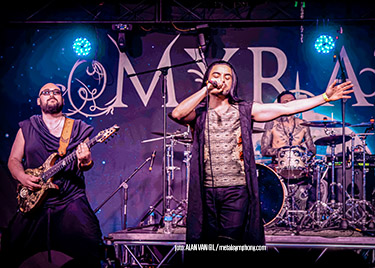
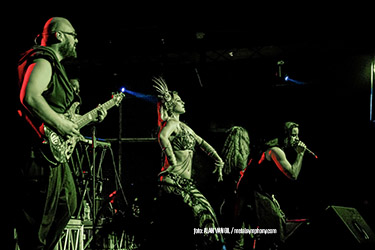
It will be a nightmare (laughs). Especially “The Funeral”. We have extended rehearsals because adapting it to five musicians is complicated. Some parts require samples, especially the African vocals.
M.S: Will there be more dates on the European tour? Will you come to Spain?
There will be more dates, but I can’t announce them yet. (laughs)
Work is being done to make it happen.


M.S: Finally, what message would you like to give to the fans?
To the longtime fans: we have taken risks and added new influences. I’m looking forward to hearing their reaction. And to those who don’t know us yet: if they’re not afraid to hear metal mixed with unusual elements, give us a chance.
M.S: Thank you very much for your time and… maybe we’ll see each other soon?
Yes, maybe. (laughs)
Thank you very much.
David Aresté